No products in the cart.























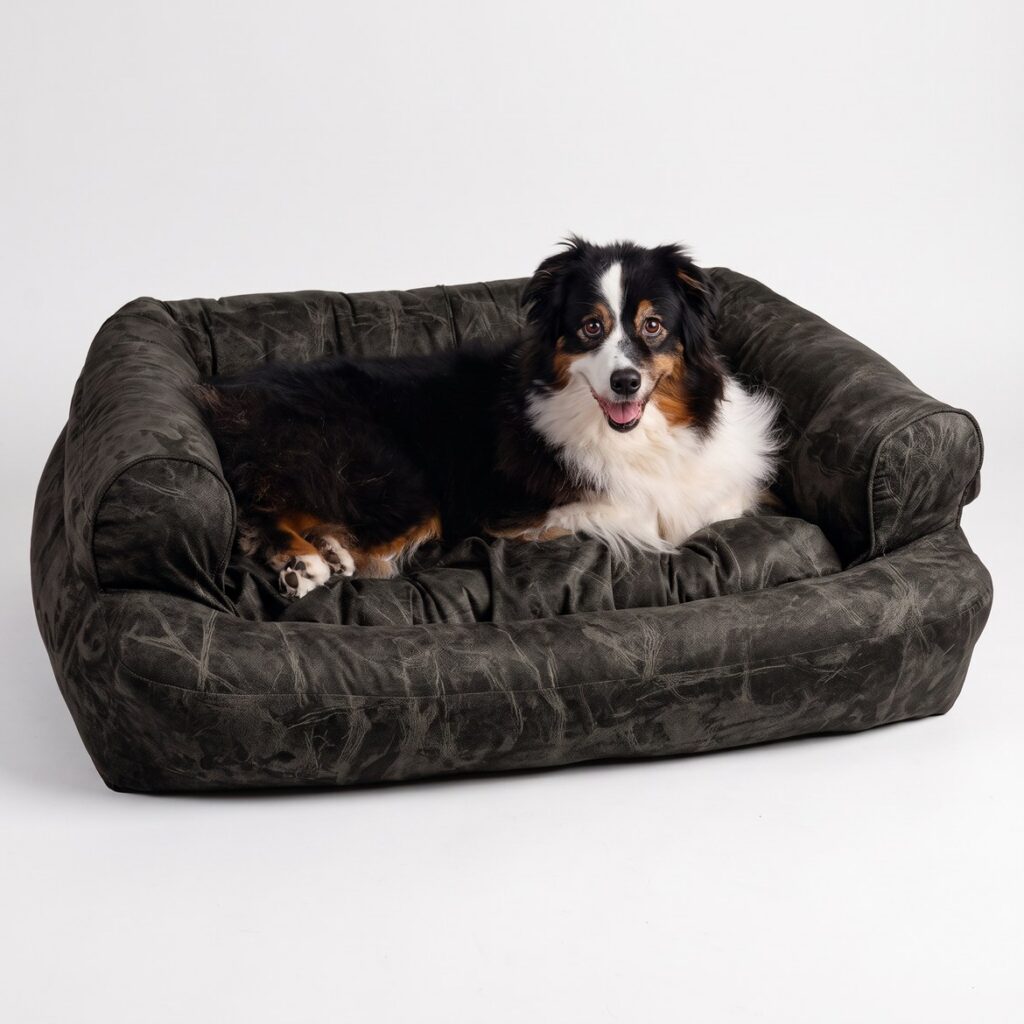
Quick answer: Occasional bed or couch licking may reflect an interesting smell or taste. Repeated licking can also occur with boredom, stress, or a health problem. Track the pattern, keep the fabric clean, and contact your veterinarian if licking is new, persistent, difficult to interrupt, or accompanied by illness.
A few licks of a cushion are easy to overlook. A soaked patch on the same armrest every evening is harder to ignore. Before replacing the couch or buying a new dog bed, work out what you are seeing and whether your dog needs help.
Start with the pattern
Write down which surface your dog licks, when they do it, and what happens immediately before and afterward. Note whether there were food crumbs, a spill, a recent cleaning, or a change in the household routine. Keep the record simple enough to use for several days.
Occasional investigation is different from repeated licking that is hard to interrupt. Some dogs develop persistent licking in connection with stress, inadequate stimulation, or medical issues such as nausea. The behavior alone cannot tell you which explanation applies.
When should you contact your veterinarian?
Arrange a veterinary check for new or persistent licking, especially if your dog seems uncomfortable or has changes in appetite, vomiting, or other signs of illness. New repetitive behavior in an older dog also deserves a discussion. A brief video and your notes can help the veterinary team understand the pattern.
If your dog tears up the fabric or may have swallowed filling, stop access to the damaged item and contact your veterinarian. A washable cover is useful for cleaning, but no soft bed should be treated as safe to eat or impossible to destroy.
Clean the surface and inspect the bed
Follow the care label for the exact cover and mattress you own. Remove crumbs and deal with spills promptly. Let cleaned components dry fully before putting the bed back together. Keep your dog away from cleaning products and freshly treated surfaces according to the product instructions.
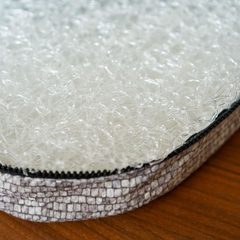
Check seams, zippers, loose threads, and exposed filling while the cover is off. Replace or repair a damaged component before returning it to use. Our dog-bed washing guide explains why the cover and insert may need different cleaning methods.
Offer another activity without making it a confrontation
For occasional licking, try a short sniffing walk, a few easy training repetitions, or an appropriate supervised toy. Reward your dog for choosing that activity or resting quietly. If the behavior keeps returning, bring that information to your veterinarian rather than repeatedly escalating the distraction.
Keep the resting area predictable and comfortable. The goal is to understand the habit and give your dog appropriate alternatives, not to scold them for a damp cushion.
Choose bedding you can maintain
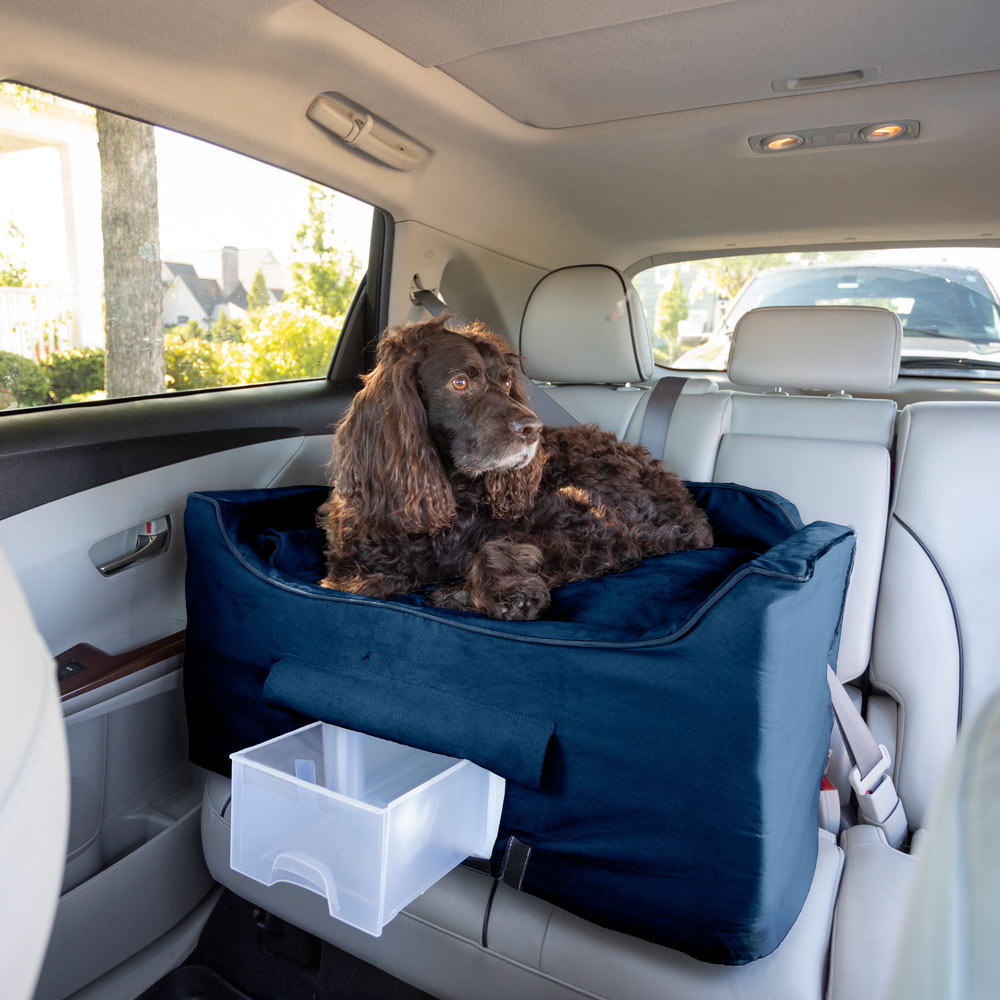
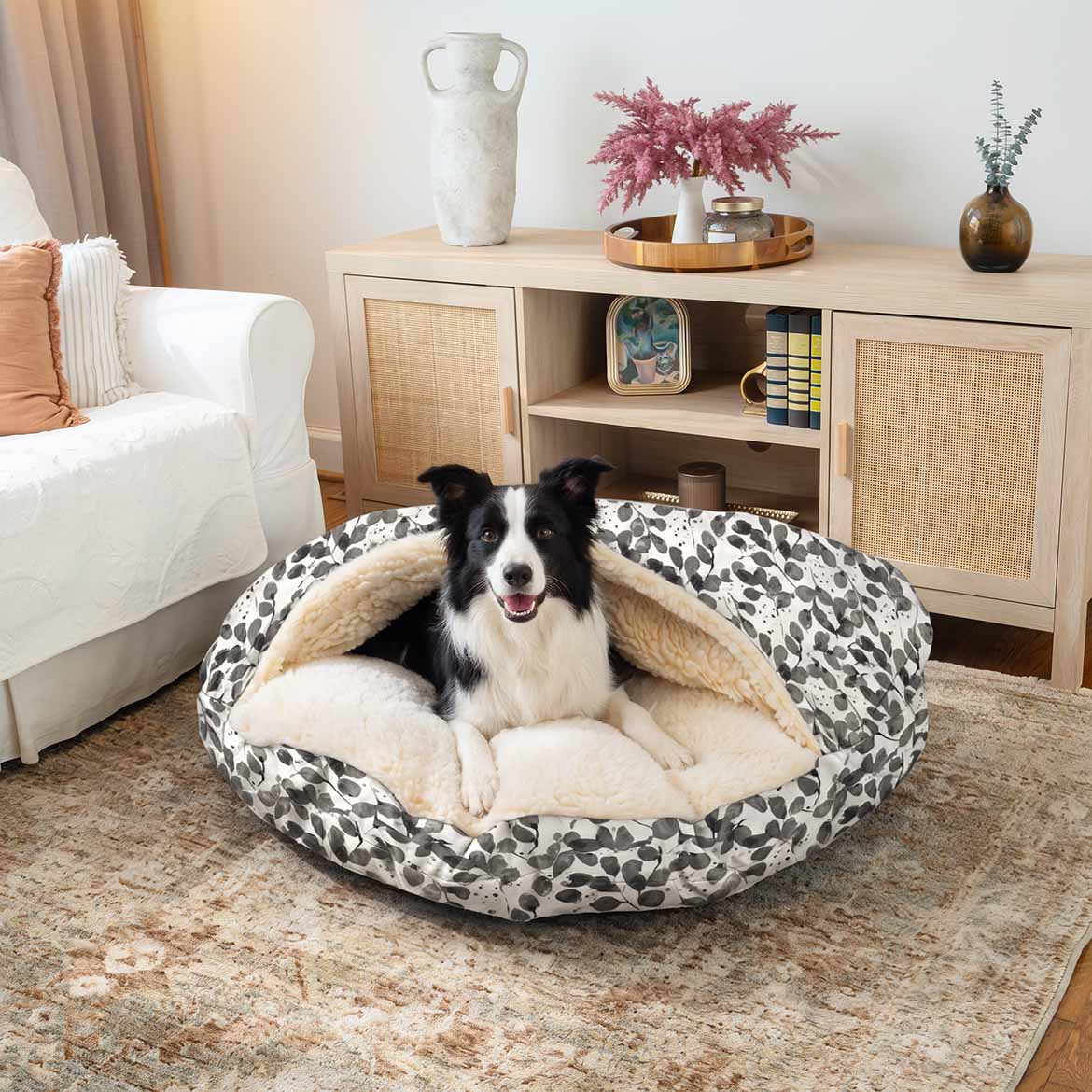
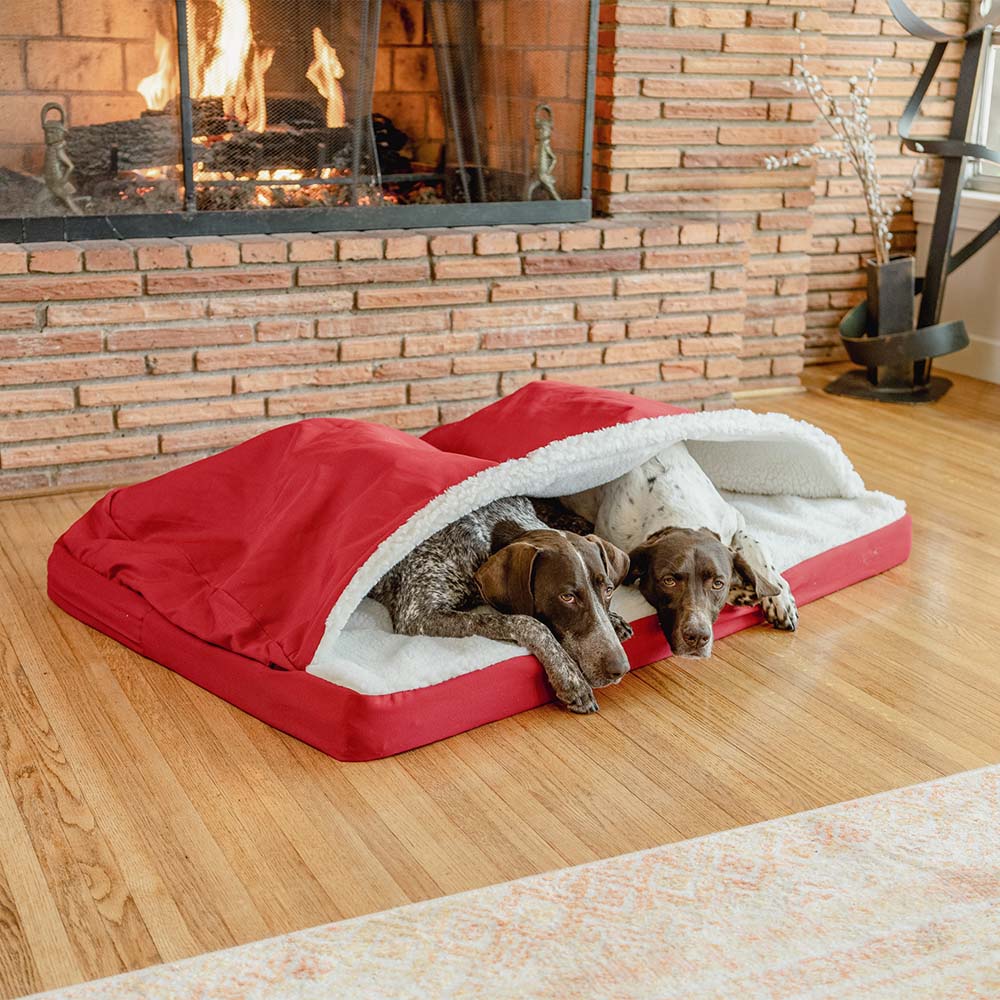
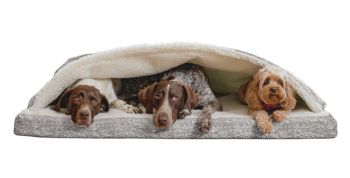
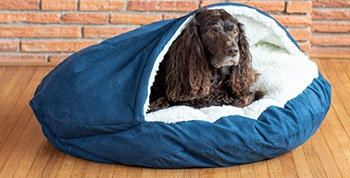
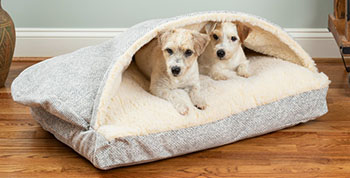
When comparing beds, ask what can actually be washed: the cover, the insert, or both. A removable washable cover does not automatically make a mattress washable. Our Cozy Cave mattress comparison explains those differences, and the Snoozer Bed Builder can help narrow the sleeping style and shape.
Easy cleaning can make everyday care simpler. It does not resolve nausea, anxiety, or a compulsive behavior, so treat the cause and the bedding decision as separate jobs.
Sources and further reading
American Kennel Club: furniture licking; American Veterinary Society of Animal Behavior: humane training guidance.
 Next read
Why Do Dogs Sigh When They Lie Down?
Read next →